
What Is SEO? A Detailed Guide for Business Owners
So, what is SEO? Search engine optimization is the practice of improving a website so that search engines, and increasingly, AI tools, can find it, understand it, trust it, and recommend it to the people searching for what you offer. It's not a single tactic. It's a combination of technical setup, content, and reputation that determines whether your business shows up when someone searches for what you do, or whether a competitor does instead.
That definition is simple, but what it actually takes to do well, is not. This is why SEO gets treated as something mysterious or becomes oversimplified. It's neither. Here's a real, detailed look at what SEO is and how it actually works.
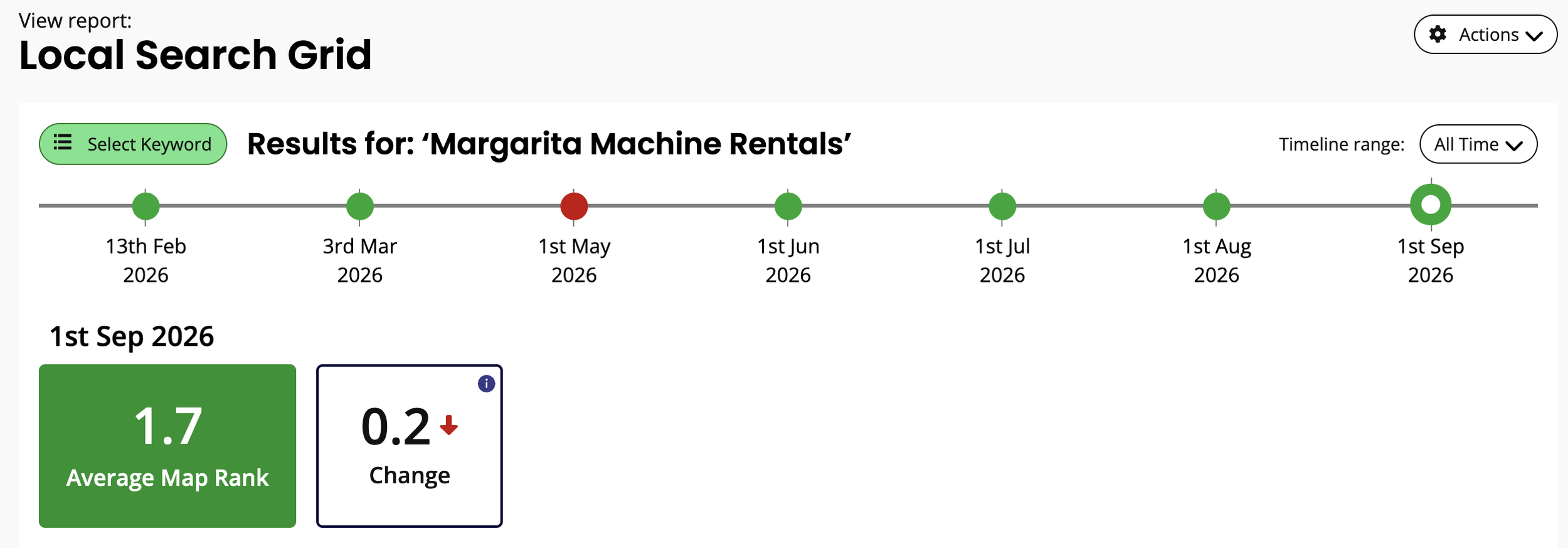
Who Needs SEO?
Any business that wants to be found by people who are already looking for what it sells. That's a wider net than most owners assume. SEO isn't just for e-commerce brands competing nationally, it's just as relevant for a local dentist, a law firm, a contractor, or a boutique, because the person searching "emergency plumber near me" or "best family dentist in Houston" is often closer to making a decision than someone scrolling social media. SEO is how you make sure your business is the one they find.
Why SEO Matters
Paid advertising gets you visibility for as long as you keep paying. SEO builds visibility that compounds. A page that ranks well can keep generating traffic and leads for months or years after it's published, without an ongoing media budget behind it. That doesn't mean SEO is free, it takes real time and effort, but the return on that effort tends to keep paying out long after a single ad campaign would have stopped. If marketing is a water faucet, paid ads are opening and closing the valve. As long as you pay to use it, you can open the valve, but when you stop paying, nothing is there. Meanwhile, SEO is like a trickling water faucet. Drop by drop, always dripping. Slowly at first, but before you know it, you’ve got a full bucket of water.
It also matters because of where people start. Most buying decisions, even ones that end with a phone call or an in-person visit, start with a search. If your business isn't visible in that moment, it doesn't matter how good your product or service is, you're not part of the decision.
How Search Engines Actually Work
Before getting into the pillars of SEO, it helps to understand what a search engine is actually doing behind the scenes. It comes down to three steps.
Crawling is when a search engine's automated bots follow links across the web to discover pages, including yours. Indexing is what happens after a page is crawled, the search engine analyzes it and stores it in a massive database, deciding what the page is about and whether it's worth showing to anyone. Ranking is the final step, where the search engine decides, out of everything in its index, which pages to actually show, and in what order, for a specific search.
SEO is the work of making sure your site is easy to crawl, gets indexed correctly, and ranks as high as possible for the searches that matter to your business.
The Four Pillars of SEO
Modern SEO breaks down into four connected areas. Neglect any one of them and the other three have to work harder to make up for it.
On-page SEO covers everything you control directly on your own website: the words on the page, your title tags and meta descriptions, your headings, your URLs, the images you use and how you label them, and the links connecting your pages to each other.
The core of on-page SEO is making sure your content actually answers the question someone is searching, using the language they'd actually use to search it. A page about "marketing agency Houston" needs to say that, clearly, more than once, in a way that reads naturally rather than stuffed in for the sake of it. Title tags and meta descriptions matter too, since they're often what a person reads before ever clicking through, and internal links (linking your own pages to each other) help both visitors and search engines understand how your content relates.
Technical SEO is the foundation that determines whether a search engine can even crawl, render, and index your site properly in the first place. This is the layer most business owners never see, and it's often where visibility problems quietly start.
This includes site speed and how quickly a page responds when someone interacts with it, whether your site works well on mobile, having a clean sitemap that shows search engines what pages exist, and structured data (often called schema markup) that helps search engines, and now AI tools, understand exactly what a page is about instead of guessing. A beautifully written page that loads slowly or breaks on a phone will still underperform, no matter how good the writing is.
Off-page SEO is everything that builds your authority and reputation outside of your own website. The biggest piece of this is backlinks, other websites linking to yours, which search engines treat as a vote of confidence. A link from a relevant, reputable site carries real weight.
But off-page SEO is broader than backlinks. It also includes how often people search for your brand by name, how much engagement your content gets when it's shared, and for local businesses specifically, your reviews and how consistently your business name, address, and phone number appear across the web. All of it feeds into the same question a search engine is trying to answer: is this a business people actually trust?
Content and AI Optimization is the newest of the four pillars, and it's becoming one of the most important. Search results today increasingly include an AI-generated summary above the traditional list of links, pulling information directly from a handful of sources it considers most trustworthy and well-structured. Being cited inside that summary, or inside an answer from a chatbot someone's using to research a purchase, is quickly becoming as valuable as ranking first the old-fashioned way, and in a growing number of searches, it's the only thing many people ever see.
Optimizing for this means writing content that clearly and directly answers real questions, structuring it so both people and machines can parse it easily, and increasingly, providing dedicated files like an llms.txt that explicitly tell AI tools what your site is about so they summarize and cite it accurately instead of guessing or getting it wrong. This is a genuinely new layer of SEO, and it's only going to matter more.
Local SEO Is Its Own Specialized Layer
Everything above applies broadly, but if you're a business that serves a physical area, local SEO adds another dimension on top of it: your Google Business Profile, your presence in local search results and map listings, and how consistent your business information is across every directory and platform you appear on. We've gone deep on that specifically in an earlier post, since it deserves its own detailed breakdown, but it's worth knowing it sits on top of the same four pillars, not separate from them.
SEO Is Not a One-Time Fix
This is the part that surprises people most. SEO isn't a project you finish. Search engines re-crawl and re-evaluate constantly, competitors publish new content, algorithms update, and what worked a year ago can quietly stop working without any obvious warning sign.
That doesn't mean it's a bottomless pit of effort either. It means treating it as ongoing maintenance rather than a one-time setup: publishing new content consistently, keeping technical issues in check, earning new backlinks and reviews over time, and revisiting older pages to keep them accurate and useful. Slow, steady, consistent effort outperforms a single big push almost every time.
How SEO Connects to Every Other Element
SEO rarely works in isolation, and treating it like a standalone service is one of the more common mistakes businesses make.
Your branding determines whether the content on the page actually sounds consistent and builds recognition once someone lands on it from a search. Your website's design and speed directly affect the technical pillar, since a slow or poorly built site undermines even the best content sitting on it. Social media and public relations both feed off-page SEO, since shares, mentions, and coverage all contribute to the trust signals search engines are evaluating. And digital advertising can accelerate visibility for terms where organic ranking will take time to build, working alongside SEO rather than instead of it.
None of these channels are really separate. SEO is one of the clearest examples of why we think about marketing as a set of elements that work together rather than a menu of services to pick from individually.
Common SEO Mistakes
A few mistakes show up more than any others. Businesses chase keywords that sound impressive but that almost nobody actually searches, instead of the specific, practical phrases real customers use. For example, if you are in kitchen remodeling and your business name is Rodriguez Reno and that’s all your site says, no one is ever going to search “rodriguez reno”. They don’t know you exist. They will search “kitchen remodeling” and then select from the results. We see this happen a lot with owners who are very proud of their business names. Maybe once they see your quality work they won’t forget you, but until then, people have to be able to find you.
Another mistake we see is owners treating SEO as a one-time project, do an initial push, and then stop, wondering months later why rankings slipped. They focus entirely on their own website and ignore off-page authority, backlinks, reviews, and citations, leaving half the picture unaddressed. And increasingly, they ignore the technical side entirely, publishing great content on a site that's slow, hard to navigate, or difficult for search engines to crawl in the first place.
Any one of these will cap how well the rest of your SEO efforts can perform, even when everything else is done well.
Five Things We Check When We Onboard a New Client
Reading about SEO is one thing. Here's what we actually look at first with every new client, in order, because these five things surface more problems than anything else we check.
1. Look at Your Actual URLs
Not the page name in your navigation menu, the real web address. Ours, for example, is limitlesselements.com/about for our About page, and limitlesselements.com/services for our services. The blog you are reading is limitlesselements.com/what-is-SEO. Clean, readable, and it obviously matches the content on the page.
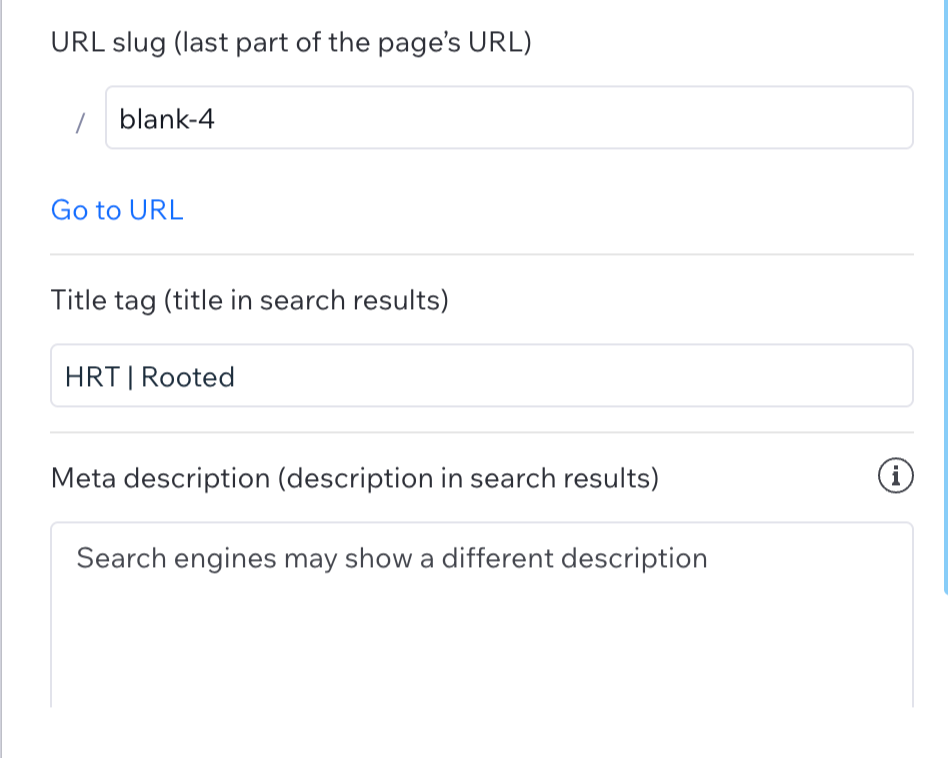
A lot of businesses have never actually looked at this or have no idea their pages are showing up as something like “yourbusinessname.com/qur7djjhks-i4”, a string of random characters left over from however the site was originally built. A search engine can't read a page like that. There are no words to work with and no clue what the page is about, and rather than trying to guess, it simply won't rank it. This is one of the fastest, cheapest fixes on this list, and one of the most overlooked.
2. Make Your Business Description Match Everywhere
Your website, your Google Business Profile, your Instagram bio, your Facebook page, and every other listing should describe your business the same way. If your homepage says you're a kitchen remodeling company, your Instagram shouldn't say bathroom remodeling and your Facebook shouldn't say pool design.
We see this constantly, and it almost always comes from good intentions: business owners assume that listing more services in more places will capture more searches. It does the opposite. When your description changes from platform to platform, search engines can't confidently determine what you actually do, and a business that appears to do everything confuses the algorithm and it ends up ranking for nothing in particular. The algorithm will give the top spots for “Kitchen Remodeling” in the search to “Jacob’s Kitchen Remodeling” who has pages on Kitchen Cabinets, Kitchen Flooring, Kitchen Gallery, a blog for Kitchen Remodeling Tips. Test it for yourself. What service do you offer at its core? Open an incognito tab, or grab your friends phone and search your core service, it might hurt that you don’t appear at all.
So, pick your core identity and repeat it, consistently, everywhere your business shows up online.
3. Get Reviews. Then Get More.
If you ignore everything we say and only do one thing from this list, do this one. Nothing signals trust to a search engine, or to a person trying to decide whether to call you, more than a strong volume of quality reviews. Ask friends, ask past clients, ask happy customers directly and specifically. Don't wait for reviews to happen on their own, because for most businesses, they simply never come. Clients don’t understand how helpful it is to a business, but in our experience, if you ask them (it’s important that you’ve done a good job), they will be happy to do it. Most people only focus on reviews if they had a bad experience then leave a scathing review. Think about the last time you had an exceptional experience at a restaurant, with a lawyer, at a dental practice, did you leave a positive review? Probably not. If they had asked you to after you had a great experience, would you have? Absolutely.
4. Build Backlinks and Citations, Even Before You Use Them
Set up a profile on every major platform with real authority behind it: a Google Business Profile, a Yelp page, a LinkedIn company page, a YouTube channel. Yes, even if you have no plans to use it.
We hear the objection constantly: "but I don't make videos" or "but I don't use LinkedIn." It doesn't matter yet. These platforms already have Google's trust, and a link back to your business from any of them is a signal search engines weigh heavily. Just claiming the account and linking it back to your site is worth doing today. Posting consistently on each one is a great next step, but it's not the priority right now, having the account itself is the bare minimum.
5. Set Up Google Search Console and Actually Read It
Your Google Business Profile shows you surface-level numbers. Search Console is the backend, and it tells you what people actually typed to find your site, not just how many people showed up.
Here's why that distinction matters. Say you run a bakery and your CRM shows 5,000 searches leading to your site last month. That sounds great… until you look closer and see that 4,000 of those searches were "chocolate chip cookie recipe" and only 100 were "bakery near me." Those 4,000 people aren't your customers, they're looking for a recipe, not a bakery. That 5,000 number means far less than it looks like on the surface. (We’re making up an example, but if this is actually the case you might need to monetize that cookie recipe.)
Two other metrics in Search Console matter just as much.
Click-through rate, or CTR, is the percentage of people who saw your site in search results and actually clicked it. If "bakery near me" showed your site 100 times and 10 people clicked, that's a 10% CTR, which is solid. If that number is closer to 1%, it usually means you're showing up for searches that aren't actually relevant to what you do.
Bounce rate is the percentage of visitors who land on your site and leave almost immediately, usually within about ten seconds, without clicking anything else. A high bounce rate means someone found you, looked, and left, often because what they saw didn't match what they were searching for. If you're a kitchen remodeler and someone clicks through expecting kitchens but sees a homepage full of pool photos, no matter how beautiful those pools are, that visitor is gone in seconds, and it hurts you.
A low bounce rate means the opposite is happening: someone searched "kitchen remodeling," landed on a page that says "Kitchen Remodeling Since 2005," saw before-and-after photos, maybe a blog post on kitchen trends and stuck around. They checked the about page, the pricing, and eventually called or filled out a form. That's an earned, valuable visit.
Most business owners assume more traffic always means more success, so they try to appeal to everyone by listing other possible services that “they could also probably do". The result is usually the opposite: a lot of visitors who aren't actually looking for what you offer, and a bounce rate that reflects it. Five thousand visitors with a 90% bounce rate is worth far less than 500 visitors with a bounce rate under 40%. Traffic that doesn't convert isn't really traffic that matters.
Contact Us
If you have any questions or are ready to build your brands foundation, fill out our contact form [Here] or give us a call for your free branding consultation (956) 929-4747
Limitless Elements is a data-driven marketing agency based in Garden Oaks/Oak Forest, Houston, TX, offering branding, web development, digital media, social media, public relations, and traditional media for businesses across the U.S. If you're ready to build a social media strategy that actually generates leads, reach out to start the conversation.
